
Draft Day
An international draft -- long opposed by the MLBPA -- may be a key bargaining chip during baseball's upcoming labor negotiations. But would it be good for the sport?


David Basabe’s grin lit up the phone screen on a recent video call, and he fielded a few questions in Spanish while he rode in the passenger seat of a car to MB13 baseball academy. The sleek complex — with baseball fields, an indoor batting/training arena, tidy dorm rooms, a full cafeteria and other amenities — is where Basabe hones his baseball skills with over a dozen other prospects on Isla de Margarita, a jewel Venezuelan island territory in the Caribbean, some 200 miles east of Caracas.
Basabe, a shortstop, isn’t your average 11-year-old, however.
In February, an X user named Wilber Sánchez (whose X bio says “sports enthusiast”) upended the start of Major League Baseball’s spring training with a post that claimed the lefty-hitting Basabe had reached a pre-agreement with the Philadelphia Phillies — including a $1.8 million signing bonus. The Phillies declined to comment then, but the news was all it took for social media and sports talk shows/podcasts to shift into high blather: Was the news accurate, and if so, how was it possible a Major League Baseball club knew to bet that big on an 11-year-old?

David Samson, the former Marlins president, spent nearly 10 minutes dissecting the news on his “Nothing Personal” podcast, blasting the ethics of such transactions, but also readily admitting that if he was still an MLB executive, “I would have done it too.” Samson made no bones about how baseball business is and has been conducted in Latin America.
“You want corruption and you think corruption exists in the U.S.? The corruption that exists in the Dominican Republic and Venezuela as it relates to baseball players, makes any corruption in the United States look like child’s play,” said Samson.
According to baseball rules, any international amateur free agent cannot sign an official MLB contract until he is 16, the age when players outside the U.S., Canada and Puerto Rico are eligible, since they are not subject to a draft.
Five months after that X post, MB13 director Jhoan Hidalgo confirmed Basabe’s verbal agreement with the Phillies to me during a phone interview in Spanish, although he did not disclose the bonus amount, nor which Phillies team official or scout participated in the agreement. Hidalgo said that of course Basabe was aware he couldn’t officially sign until he’s 16, in 2031. When I reached out to the Phillies, the team declined comment.
Hidalgo and Omar Alvarez run MB13 — the five-year-old academy’s slogan is, “The future is here” — and the two appeared in a photo with Basabe that accompanied the Wilber Sánchez post. Like most any Latin American youth baseball player, the MB13 prospects hope to pursue a professional career, especially in “las Grandes Ligas” — Major League Baseball.
Basabe, who is originally from Maracaibo, has already taken a big step in that direction.

During the brief phone video interview after he had finished his school studies for the day, Basabe — dressed in a crisp, white polo shirt and dark pants — said the two areas of his game he needs to improve are defense and batting. He has five years to reach those goals, if everything goes according to plan with his baseball development.
For all of the euphoria and excitement surrounding Basabe and his potentially lucrative future, however, the news comes during a critical juncture in baseball — on Dec. 1, the current collective bargaining agreement expires and MLB and the players’ union are expected to wage a contentious labor battle to prevent a work stoppage — baseball fans of a certain age remember the crippling 1994 strike that canceled the World Series.
The core issue is the league’s and MLB owners’ desire to finally implement a salary cap, something the union has historically (and successfully) opposed. But another negotiating chip already drawing debate and controversy is an international draft, and whether one will finally be agreed upon by both sides.
If such a policy is put into place, a decades-old system would be radically altered, but with those changes, advocates hope, would be an end or at least a reduction in the myriad problems that have plagued the Latin American baseball business — age/ID fraud; trafficking of Cuban players; steroid use; bonus skimming; and verbal/handshake agreements that MLB teams agree to with prospects years before their eligibility, but pacts which teams can also later renege or cancel outright, without repercussions, leaving prospects and their families in financial straits.
“I believe an international draft would be a step in the right direction,” said Dan Duquette, a former general manager for the Expos, Red Sox and Orioles, in an interview. “These young Latin players are recruited by buscones (street agents), and a significant portion of these signing bonuses go to the trainers or buscones. I’ve heard as much as 45 to 50%. How can you be against young players who sign these contracts having rights? A draft would better organize an on-ramp for international players.”
Joe Kehoskie, a former baseball player agent, added: “An international draft is now basically a moral imperative because the current system is incentivizing younger and younger players in Latin America not only to drop out of school, but to use performance-enhancing drugs in order to claim a portion of signing bonus money that’s being allocated earlier and earlier by MLB teams.”
+++
Even with the loud bustle of activity among the Latin baseball prospects training in the background, Rudy Santín’s booming voice can be heard over everyone and everything, as he lays into the Major League Baseball scouting director.
“Be ready for a fight,” Santín roars. “This is what happens when you fucking sign these 12- or 13-year-olds. You got four years to second-guess yourself. When you fucking sign a guy, you sign him. You made a mistake, the mistake is made.”
The heated conversation between Santín — who at the time ran a Dominican Republic baseball academy — and San Diego Padres scouting director Chris Kemp took place in March 2020, a dispute centered around one of Santín’s players. Kemp told Santín that the Padres were reducing the amount of the boy’s signing bonus by a half million dollars because, in Kemp’s words, the prospect wasn’t showing a sense of “urgency” nor developing to the team’s expectations. Since no agreement had been signed, Santín’s player was at the mercy of the Padres.
What Kemp did not know was that Santín secretly recorded the conversation after he was instructed by federal authorities to do so. Santín had already met with the feds at least two times before his meeting with Kemp, and although he was not a target, Santín was cooperating with authorities leading a sprawling federal investigation into MLB’s Latin America business dealings.
The Cuban-born, grizzled Santín had worked as a MLB scout for three different teams, including the Yankees, during his lengthy career evaluating baseball talent, and he’d negotiated his fair share of contracts for teenage prospects after opening the D.R. academy. But during the last year of his life, Santín had taken up a different cause: vocal advocate for change in the sport.
Santín hoped that new regulations or even an international draft could be implemented to help eradicate what he said was rampant corruption throughout Latin America, in particular the handshake/verbal agreements MLB teams reach with underage prospects. Such transactions not only violate baseball rules, they may also constitute breaking U.S. laws.
Santín didn’t live long enough to see if his hopes would be fulfilled, or if the federal investigation would effect any change. He suffered a fatal heart attack on May 3, 2020 in the Dominican. That same spring, Teri Thompson and I had been reporting and writing a story on Santín and the federal probe for USA Today Sports, and we had talked with Santín over a dozen times by phone, all on the record, before his untimely death at age 60. We had also reviewed the recorded conversation between Santín and Kemp, and Santín had confirmed several components of the federal investigation, including the context of his meetings with FBI agents.
Santín reached several verbal agreements with Chris Kemp and the Padres by the spring of 2020 — just as the global pandemic was surging — only to have the team reduce one signing bonus (captured in the recorded conversation) and renege on two other deals, as Santín would tell Teri and me.
About a month after he was wired for his meeting with Kemp, Santín said that he received a late-night phone call from Kemp. During the mid-April 2020 call, Kemp told Santín that the Padres were pulling out of deals with two of Santín’s teenage prospects — Cristian Garcia and Luis Frias. Both players were set to sign with the club on July 2, 2020.
“I asked (Kemp): ‘Do you know what you’ve done? The kid has a (number) on his back, ‘Don’t look, don’t touch, I’m signed.’ Then you pull the rug out from under him?’ ” Santín told us, referring to his conversation with Kemp. When we reached out to Kemp for the story, he declined comment. Garcia eventually signed with the Angels and played in their farm system from 2021-24. Frias, an outfielder whom Santín compared to the late All-Star outfielder Paul Blair, played for the San Francisco Giants’ Dominican Summer League team for several years, and is still playing at a rookie-league level this year. In a recent WhatsApp text, Garcia’s father Miguel said his son is still looking for work.


[https://www.usatoday.com/story/sports/mlb/2020/06/16/mlb-international-free-agents-deals-underage-prospects/5334172002/]
Six years after Santín’s passing, no international draft is in place, and the federal investigation — which was led by Justice Department prosecutors who specialize in the Foreign Corrupt Practices Act (FCPA) — never resulted in any indictments or criminal charges. It’s unclear when or whether the probe was ultimately closed.
Although the MLB Players Association has already spurned the league’s initial CBA proposal terms regarding a salary cap, the union might be willing to concede to an international draft this negotiating session, both as a compromise and a means to keep an overall cap in place. But whether such a policy would be good for baseball and whether it would reduce the corruption ingrained in the international player signing process is subject to debate, and recent interviews with over two dozen people connected to baseball — most of whom did not want to be named — suggest no consensus either way.
“I’ve been an advocate of an international draft for as long as I’ve been involved with Latin American players. You hear all of the horror stories, which happen in a market and economy that incentivizes bad behavior,” Chris Koras, Head of Sports for Working Capital Partners (a California-based financial firm) and the former Head of Baseball for Klutch Sports Group agency, said in an interview. “It’s been a system that looks the other way. I think the implementation of an international draft adds real transparency, real oversight, legitimacy, and infrastructure that, at the end of the day, will be great for prospects.”
Jeremy M. Evans, a sports attorney and the CEO of California Sports Lawyer, added that he thinks the union — the regulatory body for certified agents — will fight against an international draft, which might be a detriment to its membership.
“It would help players, help equalize the market,” said Evans. “For small-market teams, they might now have more access to Latin American (players). If the union wanted a fair system, they would have an international draft.”
In numerous interviews with people in MLB executive ranks, the prevailing opinion is that front offices are in favor of an international draft, while other sources familiar with the MLB owners’ thinking say the draft issue is barely a blip on the owners’ radar. Only when a negative story surfaces in Latin America — a prospect busted for steroids, or allegations of corruption or exploitation— do the owners and commissioner’s office seem to take notice. Bad publicity is no good for the sport.
Similarly, agents and scouts seem divided on uprooting a system that has been status quo for years.
“I’m personally against implementing an international draft,” said one scout. “One of the biggest advantages an organization can create is through relationships. You spend years building trust with players, families, and trainers, and organizations that invest the time, people, and resources into the international market should be rewarded for that work. I’m all for cleaning up the current system—eliminating early handshake agreements, creating more transparency, and protecting young players—but I don’t believe a draft is the answer. In my opinion, it would eliminate one of the few true competitive advantages organizations can still create, and it would push clubs even further toward relying on the same draft models and industry consensus that are already too heavily relied upon in the (U.S.) amateur draft.”
Even if the two sides were to agree on an international draft, however, there are Herculean hurdles to confront. As one agent said, “You have Japan, Korea, Taiwan, and Mexico, countries that have formal, professional leagues. I don’t foresee that any (country) is going to readily submit to something that is going to negatively impact the players from their countries and limit their rights to who they can play for.”
Japanese players, as an example, are posted by their Japanese professional clubs before an MLB team can sign them.
In baseball talent-rich countries like the Dominican Republic, Venezuela, and Cuba, it gets even more complicated. Those respective governments could refuse such policies outright, and in the case of Venezuela, the current political landscape is still tenuous following the U.S. capture and extradition of former leader Nicolás Maduro earlier this year.
U.S.-Cuba relations, meanwhile, are strained under the current Trump administration, and the decades-old sanctions against Cuba remain in place. Earlier this year, Trump signed an executive order that declared Cuba “constitutes an unusual and extraordinary threat” to the U.S. During the Trump’s first term, his administration reportedly squashed a deal MLB had negotiated with the Cuban Baseball Federation which was designed to address and reduce trafficking of players off the island.
[https://www.espn.com/mlb/story/_/id/26472986/white-house-scuttles-mlb-cuban-agreement]
One former agent posed this scenario regarding Cuban players: “Here’s the problem with the international draft – how do they draft Cubans? Teams are not allowed to go to Cuba to scout, and you can only scout Cuban players when they (defect). If a Cuban player gets signed, isn’t that player not supposed to give the Cuban government 10% or 20% of his salary? The U.S. is not supposed to do any business in Cuba, so how can MLB team do business there, and pay that player?”
According to a June 18 ESPN report, the league’s latest proposal for an international draft would increase the age of eligibility to 18-years-old, and the draft would consist of “12 hard-slot rounds, with an initial signing bonus pool totaling $200 million for 360 amateur players residing outside the United States, Canada and Puerto Rico.”
[https://www.espn.com/mlb/story/_/id/49107139/sources-mlb-proposes-international-draft-part-cba-talks]
During the last CBA negotiations (2021-22), the two sides tabled talks on the international draft until July 2022, and then the union promptly rejected the proposal. Prior to that, during the 2016 labor talks, many viewed the union’s agreeing to a cap on teams’ international budgets as a concession.
“A hard-slotted international draft would bring much-needed sunlight and transparency to MLB’s international player procurement, especially in Latin America,” said Kehoskie, the former player agent. “It would reduce if not eliminate the pressure on players who are years away from draft eligibility to leave school or use PEDs (performance-enhancing drugs). It would also protect late bloomers — and by “late bloomers,” we’re talking about players who are only 15 to 17 years old — who currently get squeezed or go unsigned because most teams’ signing budgets are now allocated years in advance.”
Verbal agreements are one strategy that Latin American trainers and buscones (“seekers” or “finders”) have used for years to “hide” or protect their prospects. It starts at an early age, when a trainer or buscon will scout talent and then establish lengthy training relationships with pre-teens — paying for their housing and food, supplying them with equipment and training facilities during their early baseball development. If the prospects reach deals with MLB clubs, trainers and buscones stand to make big paydays from their share of a signing bonus.
“I don’t think (a draft) would be good at all, but it will be a chip both sides play with, and it will eventually get done, I think,” said Jaime Torres, a former player agent who represented dozens of international players, including Cubans José Contreras and Yasiel Puig. “MLB will benefit (from an international draft) and the MLBPA will probably give a shit about it. I wish an international draft would eliminate the problems, but I don’t think so. Buscones and academies find ways of hiding kids.”
The stakes have only grown. MLB clubs looking for the next Pedro Martinez or Vladimir Guerrero, enter into verbal deals with Latin prospects as young as 10 or 11, years in advance of their eligibility. The handshake pacts are made as a way for a MLB team to stake an early claim in a potential jewel prospect — essentially “hide” him from other clubs — with the promise of a big signing bonus.
But along the way, any number of adverse factors can occur — an MLB front office could be gutted and replaced, where the new GM or president of baseball operations decides to drop those handshake deals and allocate the money elsewhere. Since nothing is written or signed, the teams move on unscathed, while the prospect is cut loose with no bonus, no team and a bleak future.
Or, as in the case of Rudy Santín’s player, a team can decide that a prospect isn’t developing quickly enough, or worse, isn’t as good as the team projected. The club in turn says, “Thanks, but no thanks.” Again, without any written agreement, a prospect who has his verbal deal pulled has little to no recourse.
The problems mount if prospects — and their families — have taken loans to pay the trainers or buscones, and then see the verbal agreement vanish. The kid suddenly has no money to pay their trainer/buscon, and has no money to pay the loan shark who might have given them money in the first place, a situation that could worsen if the loan shark charges usurious interest rates.
While reporting the USA Today story, MLB issued a statement in response to allegations it turns a blind eye to any handshake agreements MLB teams conduct in countries like the Dominican.
“We are clear with clubs, players and their agents that any agreements or understandings prior to the date when a player is eligible to sign are completely unenforceable and are not recognized by our office,” part of the MLB statement read.


A year prior, in 2019, Teri Thompson and I worked with Will Hobson on a Washington Post series that looked into the same federal investigation, Santín, MLB clubs and other witnesses who had been subpoenaed in the probe, and a 2017 federal trial that resulted in the convictions of baseball agent Bart Hernandez and trainer Julio Estrada. Both men were charged with smuggling Cuban-born baseball players off the island.
The Hernandez trial, through court records and testimony, revealed the seedy underworld of trafficking Cuban players. In one of our Post stories, we wrote how a Hernandez accomplice testified that she and her associates “bribed Mexican immigration officials with amounts in the range of $6,000 per player for residency papers that included fraudulent home addresses and fabricated places of employment.” Cuban players who defect have historically set up residence in a third country, where their chances of a lucrative MLB contract increase exponentially. If they come directly to the U.S., they would be subject to the draft.
One of the federal prosecutors involved in the Hernandez case, Patrick Sullivan, called out MLB’s policies on Cuban players. “MLB’s own rules and regulations… encourage the smuggler and fraudsters to go through the charade.” And a former assistant U.S. Attorney, Ben Daniel, added: “There’s a lot of willful ignorance going on. It’s obvious American baseball knew what was going on” with Cuban players coming to the U.S.
[https://www.washingtonpost.com/sports/mlb/as-feds-probe-mlbs-latin-american-operations-a-flashy-scout-and-contested-deal-draw-interest/2019/09/10/12a32708-c02e-11e9-a5c6-1e74f7ec4a93_story.html]
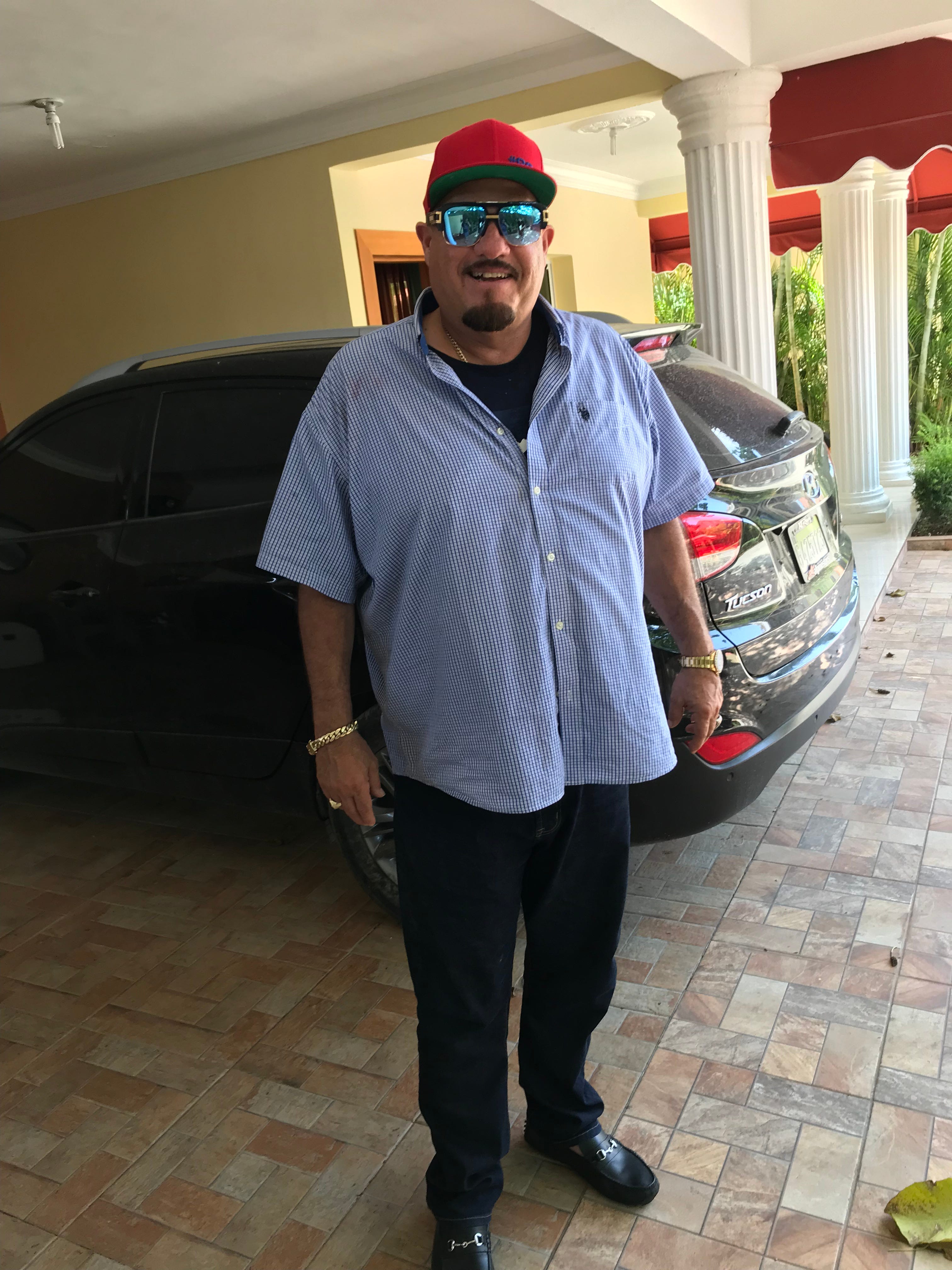
Hobson and I traveled to the Dominican in 2019 where we interviewed Santín at his home. The main focus of that interview was Santín’s training of Cuban player Héctor Olivera, a huge MLB bust, but who later testified before a Washington D.C. federal grand jury in connection with the investigation into MLB’s Latin America business dealings.
For all of the scrutiny of baseball business in Latin America, critics of the international draft point to the U.S. having similar problems when it comes to the development of youth amateur athletes. Teenage boys can commit to playing college basketball at 14 or 15 years of age, while baseball travel teams are a comparable analog to the buscon system in Latin America. Boys as young as 14 can play at elite baseball academies like IMG. The difference is, in the U.S., it’s pay to play.
And what of the buscon/trainer system if an international draft is established? MLB already has a Trainer Partnership Program in four Latin American countries — Colombia, Venezuela, the Dominican and Panama, and there is an affiliate academy on the same Isla de Margarita. [https://www.mlb.com/trainer-partnership]
But beyond tourism, baseball is considered the biggest industry machine in places like the Dominican — from scouts to coaches to academy directors to Dominican team owners to buscones. Uproot the system as it is and there might not be any more player pipeline. As Santín told Teri and me for the USA Today story, Latin baseball prospects consider their buscon/trainer as “God.”
Santín, like numerous Latin American trainers interviewed for this story, was all for an international draft “done the right way,” but he warned that any system would never entirely remove buscones/trainers from the Latin baseball development business.
“At 6-years-old, a kid is thinking about somebody to pitch to me, give me a glove,” said Santín. “This guy would then bring a player to a trainer at age 13. You tell me, you think that guy is going to give that player to MLB? The mother and the player will do exactly what that trainer says. That trainer is God.”